
Profile of Bilebante Green Tourism Village

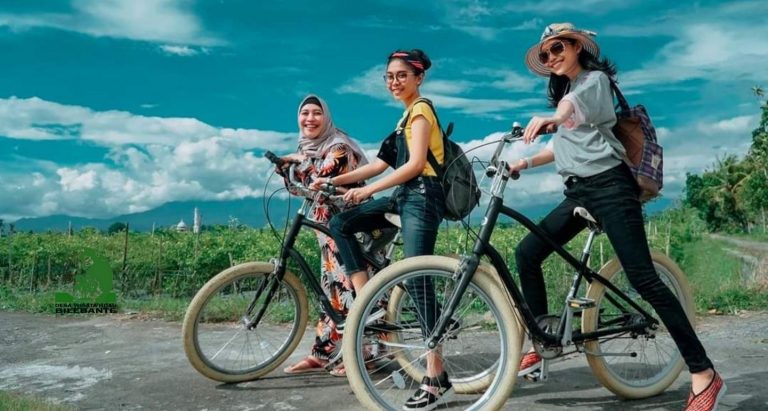
paket sepeda di Bilebante

Vision

The realization of a Bilebante Village that is clean, healthy, beautiful, safe, prosperous, skilled, and outstanding (Bersinar Terang).

Mission

1. To ensure that village governance is clean, transparent, accountable, effective, and efficient.
2. Improve environmental sanitation facilities and work to enhance public health coverage through government programs.
3. Optimizing the development of human resources and all potential within the community in the fields of youth affairs, agriculture, tourism, and livestock farming, among others, to improve residents’ well-being.
4. Make every effort to revitalize Village-Owned Enterprises (BUMDes) in order to improve the community’s well-being.
5. To nurture the younger generation through religious activities and training so that they become religious, skilled, professional, and outstanding young people.
6. Expand training and educational programs in business skills to foster a skilled workforce and reduce unemployment, thereby creating thriving families.
7. Enhance the promotion of the Bilebante Green Tourism Village to increase tourist visits to Bilebante Village, continue the Bilebante Green Tourism Village programs, and preserve the community’s culture and traditions.
8. Continue implementing central and local government programs equitably in accordance with technical guidelines.
9. Maintaining security, peace, mutual respect, and protection among people of different faiths.
10. Building infrastructure in all sectors to improve convenience and increase the income of villages and communities.

The History of Bilebante Green Tourism Village

  • Bilebante Village has been established for approximately 100 years and is located in Pringgarata Sub-district, Central Lombok Regency, West Nusa Tenggara, with an area of 28,365 km2 and a population of 4,264 people, where the majority of the population is of productive age 
  • In Bilebante, the Sasak community lives peacefully alongside the Hindu community. The two cultures blend harmoniously and are a source of pride for the village community.
  • Kata Bilebante The name was Bilebante is derived from two words, "Bile," which means maja fruit (in Indonesian), and "Bante," which means dense undergrowth (in the Sasak language), implying a bile tree intertwined with dense undergrowth that binds strongly.
  • Bilebante Bilebante embodies a philosophy and values that strengthen the village community as a manifestation of cooperation and unity with all elements of the Bilebante village community.

Transition to a Tourism Village

  • In the past, the Bilebante village community relied solely on sand mining as a source of income.
  • However, the community realized the potential negative impact in the future and decided to seek alternative sources of income.
  • Additionally, there were social and environmental issues such as early marriage, many young men and women becoming overseas workers due to a lack of opportunities and skills in their village, and waste problems.
  • One of the potential sectors identified was tourism due to its potential for creating social, economic, and environmental benefits.multipler effect) yang dapat diciptakan untuk memberi manfaat sosial, ekonomi dan lingkungan.
  • Bilebante has great potential to be developed into a tourism village due to its beautiful natural surroundings and motivated and eager workforce.

Steps Towards a Tourism Village

  • Initially, the Pijar program (cattle, corn, and seaweed) was implemented for the Putri Rinjani Cooperative chaired by Hj Zaenab, which attracted many visitors to learn about making tortillas from corn and seaweed. This sparked the idea of developing a tourism village.
  • In 2015, specifically on April 4, a joint project between the Indonesian and German governments—implemented by Bappenas and GIZ—supported Bilebante Village’s plan to become a tourism village. At the end of 2015, a workshop was held with all segments of the village community to raise awareness about the tourism village development plan and to formulate an action plan based on the village’s tourism value chain.
  • The planning process considered social, economic, and environmental aspects of Bilebante village.
  • Bilebante Green Tourism Village was officially inaugurated in 2016, and attended by the Ministry of Cooperatives and SMEs, Bappenas, GIZ, and the Central Lombok Regency Government.
  • The management of the tourism village is governed by the Bilebante Green Tourism Village Regulation No. 03 of 2016. Peraturan Desa Wisata Hijau Bilebante No 03 tahun 2016 tentang Pengelolaan Desa Wisata Hijau Bilebante
  • The organizational structure is designed to be participatory, transparent, and accountable.
  • The roles of the Village-Owned Enterprises (BUMDES) and cooperatives are clearly defined in the organizational structure.
  • This institutional setup reflects the role of the village community as the owners of the tourism village activities, ensuring that the benefits are maximized for the entire community. masyarakat desa sebagai pemilik dari kegiatan desa wisata sehingga manfaatnya harus semaksimal mungkin diterima oleh seluruh masyarakat.


Management of Bilebante Green Tourism Village:

  1. 1. Pahrul Azim (Director of Bilebante Green Tourism Village)
  2. 2. Abdul Halik (Head of Fishing Market)
  3. 3. M. Tohri (Head of Herbal Garden)
  4. 4. Irmayanti (Head of Fitness Therapists)
  5. 5. Ikawati (Head of Culinary)
  6. 6. M. Rizal Aidi (Head of Bicycles/Guides)

Collaboration with Tour Operators

  • Cooperation with national and international tour operators to develop tour packages and access for promotion and marketing. tour operator nasional dan international untuk mengembangkan paket wisata dan akses untuk promosi dan pemasaran.
  • The number of tourist visits, both domestic and foreign, has increased sharply so that the local economy is getting excited.
  • Due to the Covid-19 pandemic, tourism activities have stopped completely since March 2020. Only recently have tourists returned to visit, especially after receiving a CHSE certificate from the Ministry of Tourism and Creative Economy.

Improving MSME Product Quality

  • Before becoming a tourist village, Bilebante was known for its UMKM products with Lombok's superior raw materials, such as corn and seaweed.
  • Bilebante is a national seaweed processing MSMEs training center.
  • Since it was developed into a tourist village, Bilebante MSME products have been growing both in quantity and quality.
  • During the Covid-19 pandemic where the tourism sector was affected, it was proven that Bilebante MSME products really supported the economy of rural communities, especially with innovation and diversification of healthy food and beverage products, such as herbs and snacks without preservatives, flavors and dyes.

Impact of Innovation and Improvement

1. Increased Revenue

The average income from tourism activities is Rp 3 million (source: Multiplier Effect Study, November 2019, GIZ), while the regional minimum wage (UMK) for Central Lombok in 2019 was Rp 2,021,000. Thus, it can be seen that there has been a significant increase because in April 2019, 60% of evaluation respondents had an average monthly income from their primary job of less than Rp 1 million (source: Baseline Study, April 2019, GIZ).

2. Creating new jobs for the community

The creation of job opportunities for young people and women, especially homemakers, thereby preventing urbanization and reducing the desire to become migrant workers.

3. Capacity Building

The creation of job opportunities for young people and women, especially homemakers, thereby preventing urbanization and reducing the desire to become migrant workers.

Impact of Innovation and Improvement

1. Infrastructure Development

  • - Fitness training in 2020 by the Ministry of Tourism and Creative Economy
  • - Fitness Tourism Center with DAK Tourism by the Ministry of Tourism and Creative Economy

Arranged together with stakeholders

Developed in collaboration with corporate partners

3. Opportunity to participate in national events and become a guest speaker

4. Becoming a pilot tourism village for implementing CHSE in West Nusa Tenggara

Visiting Etiquette

1. The village of Bilebante consists of Muslim and Hindu hamlets that live in harmony. Ask your local guide about the area’s rich culture.

2. Dress appropriately while traveling.

3. Keep the area clean by not littering while sightseeing.

4. Follow the advice and instructions of the Bilebante Green Tourism (DWH) staff during the orientation and briefing before your tour.

5. Support the local economy by purchasing local processed foods and handicrafts from women’s groups and rural communities.

6. Make the most of your experience while visiting Bileante Village and share it with your friends and family.

7. Protect and preserve the flora and fauna in Bileante Village, especially protected species (do not shoot or hunt animals, do not catch fish using chemicals—fishing is permitted only in fish ponds—and do not pick or uproot plants indiscriminately).

You can check the full details of the awards received by the Bilebante Green Tourism Village in the Award Gallery Menu

Download the e-book “Bilebante Village’s Journey Toward Becoming a Sustainable Green Tourism Village” here!